Knowing how to check your engine oil is one of the simplest yet most important skills you can have as a vehicle owner. Your engine oil keeps your car running smoothly and prevents costly damage, but if the level is too low or the oil is dirty, trouble could be just around the corner.
You might wonder when the best time is to check your oil, how to do it right, and what signs to watch for. This guide will walk you through every step, using clear and easy instructions so you can keep your engine in top shape without any guesswork.
Ready to take control of your car’s health? Let’s dive in and make checking your engine oil quick and hassle-free.
When To Check Oil
Knowing the right time to check your engine oil helps keep your car running smoothly. The oil level changes with temperature, affecting the reading. Checking at the proper time gives the most accurate result. This section explains the best moments to check your oil for safety and precision.
Cold Engine Benefits
Check the oil when the engine is cold or off for several minutes. Cold oil has settled in the oil pan, showing the true level. This method gives the most accurate reading. It prevents overfilling or underfilling your engine oil.
Cold checks reduce the risk of burns from hot engine parts. The oil is not expanded by heat, so the level is stable. This helps you get consistent measurements every time.
Checking Hot Engine Tips
Sometimes, checking oil right after driving is necessary. The oil is hot and partly spread in the engine. This can cause the level to appear lower than normal.
When checking hot oil, wait a few minutes after turning off the car. Use caution to avoid touching hot parts. If the oil level is low, add a small amount. Recheck after the engine cools down for accuracy.
Best Timing For Accuracy
The best time to check oil is in the morning before driving. The engine is cold, and oil is fully settled. This timing ensures the most precise oil level reading.
Check oil regularly, at least once a month, or before long trips. Consistent timing helps track oil consumption and engine health. Accurate oil level readings protect your engine and improve performance.

Credit: www.youtube.com
Preparing To Check
Preparing to check your engine oil properly ensures an accurate reading and keeps you safe. Follow these simple steps before you start. Getting ready helps avoid mistakes and protects your vehicle’s engine.
Park On Level Ground
Find a flat, level surface to park your car. This helps the oil settle evenly in the oil pan. Parking on a slope can give a false reading and mislead you about the oil level.
Let Engine Cool
Turn off your engine and wait at least 5 to 10 minutes. This allows the oil to drain back into the pan. Checking oil when the engine is hot can give an incorrect level and may cause burns from hot parts.
Gather Necessary Tools
Get a clean rag or paper towel ready. You may also need gloves to keep your hands clean. Having these tools handy makes the process quick and easy. No extra tools are usually required beyond these basics.
Locating The Dipstick
Finding the dipstick is the first step to check your engine oil. The dipstick measures the oil level inside the engine. It is a long, thin metal rod that slides into the engine’s oil reservoir. Knowing where to find this tool makes the oil check fast and easy. Dipstick locations vary by car model and engine type.
Common Dipstick Locations
Most dipsticks sit near the front of the engine. Look for a thin metal rod sticking out from the engine block. Sometimes it is close to the oil filler cap. It may be on the left or right side of the engine. In some cars, the dipstick is behind the engine near the firewall. Newer cars may hide the dipstick or use electronic sensors instead. Check your car manual if unsure.
Identifying The Dipstick Handle
The dipstick handle usually has a bright color. Yellow, orange, or red are common colors. This color helps you spot it quickly under the hood. The handle often looks like a small ring or a T-shape. You can pull it out easily using the handle. Some handles have a plastic grip for better hold. Avoid confusing the dipstick with other rods or cables.
Credit: www.samarins.com
Reading The Oil Level
Checking the engine oil level helps keep your car running smoothly. It shows if your engine has enough oil for protection. Reading the oil level is simple once you know the steps.
Use the dipstick to measure the oil. This tool shows the exact oil amount inside the engine. Understanding how to read it is important for car health.
Removing And Cleaning Dipstick
Open the car hood and find the dipstick. Pull it out slowly and carefully. Use a clean cloth or paper towel to wipe the dipstick fully. This removes old oil for a clear reading.
Reinserting And Checking Marks
Put the dipstick back into the tube all the way. Then pull it out again to check the oil level. Hold it at eye level to see the oil marks clearly. Avoid tilting the dipstick for best accuracy.
Interpreting Oil Markings
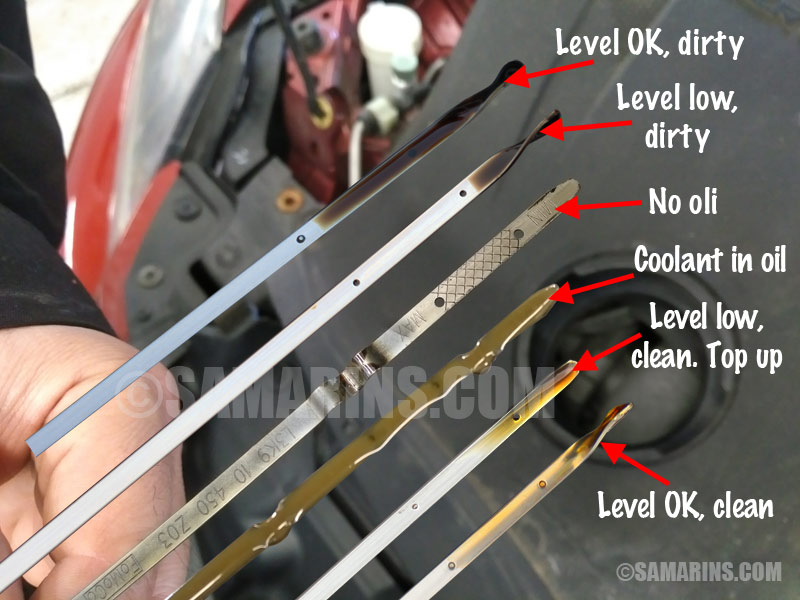
The dipstick has two marks: low and full. Oil should be between these marks. If the oil is below the low mark, add more oil. If it is near or above the full mark, do not add oil.
Oil that looks very dark or dirty may need changing. Clean oil is usually amber or light brown. Regular checks help avoid engine damage and keep your car safe.
Evaluating Oil Condition
Evaluating the condition of your engine oil helps maintain engine health. It goes beyond checking the oil level. You must observe the oil closely. This helps spot problems early. Simple checks can save costly repairs.
Checking Oil Color
Fresh oil is light amber or golden in color. Dark or black oil means it is old or dirty. If the oil looks very dark, it may need changing. Sometimes, oil can look milky. This suggests water or coolant mixing with the oil, a serious issue.
Noticing Oil Texture
Rub some oil between your fingers. Clean oil feels smooth and slick. Gritty or rough texture means dirt or metal particles are present. This can harm engine parts. Thick or sticky oil may lose its ability to lubricate. That can cause engine wear.
Detecting Unusual Smells
Fresh oil has a neutral, mild smell. A burnt or sharp odor means oil is overheating. This can damage the engine. A sweet or syrupy smell could mean coolant leaks into the oil. This needs immediate attention to avoid engine failure.
Adding Engine Oil
Adding engine oil is a simple task that helps keep your car running smoothly. Knowing how to add oil correctly prevents engine damage and saves money. Follow these steps to add oil safely and effectively.
Choosing The Right Oil
Select the oil type recommended in your car’s owner manual. Use the correct viscosity grade for your engine and climate. Synthetic oils often provide better protection, but regular oils work well for older engines. Avoid mixing different oil types to prevent engine problems.
How To Add Oil Safely
Park your car on a flat surface and turn off the engine. Open the hood and locate the oil filler cap. Clean the area around the cap to prevent dirt from entering. Slowly pour oil using a funnel to avoid spills. Add small amounts and check the level frequently to avoid overfilling.
Rechecking Oil Level After Adding
Wait a few minutes after adding oil to let it settle. Use the dipstick to check the oil level again. Pull out the dipstick, wipe it clean, then insert it fully and remove it to read the level. Make sure the oil level is between the minimum and maximum marks. Do not overfill, as too much oil can harm the engine.
Common Mistakes To Avoid
Checking your engine oil regularly keeps your car running smoothly. Avoiding common mistakes ensures you get accurate results. These errors can lead to wrong oil levels, causing engine trouble.
Simple steps can prevent these problems. Pay close attention to where and how you check the oil. Small errors may cause big issues in the long run.
Checking On Uneven Surfaces
Always check your oil on a flat, level surface. Uneven ground can give a false reading. The oil may pool to one side, showing an inaccurate level. This mistake can cause you to add too much or too little oil. Find a flat spot before opening the hood.
Ignoring Engine Temperature
Check the oil when the engine is cold or has been off for a few minutes. Hot oil flows differently and can give a wrong reading. When hot, oil spreads through the engine parts and may not settle. This can make the level seem lower or higher than it is. For safety, cold engines are best to avoid burns.
Overfilling Oil
Adding too much oil can harm your engine. Overfilled oil can cause pressure to build and damage seals. It may also lead to poor engine performance and increased emissions. Follow the dipstick marks carefully. Add small amounts and check frequently to avoid this mistake.

Credit: www.expresslube.com.au
Regular Oil Check Schedule
Keeping a regular schedule to check your engine oil is key to your car’s health. Oil lubricates engine parts and prevents damage. Without enough oil, your engine can overheat and fail. Checking oil often helps catch problems early. It also extends the life of your engine. A set routine makes this task simple and part of your car care.
Recommended Frequency
Check your engine oil at least once a month. This is enough for most cars and drivers. Also, check before long trips or heavy use. Follow your car’s manual for specific advice. Newer cars may have oil life sensors, but manual checks are still good. Regular checks keep you informed about oil levels and quality.
Signs To Check More Often
Check oil more often if you notice leaks or smoke. Strange engine noises can mean low oil. Driving in tough conditions needs more frequent checks. This includes hot weather, dusty roads, or towing heavy loads. Warning lights on your dashboard also signal a need to check oil. Early checks prevent costly repairs and keep your car running smoothly.
Frequently Asked Questions
Do You Check Your Oil When The Engine Is Hot Or Cold?
Check your engine oil when the engine is cold or off for a few minutes. Cold oil settles, giving a more accurate reading. Hot oil can give false levels because it expands and circulates. Always park on a level surface for the best results.
What’s The Proper Way To Check Engine Oil?
Park your car on a level surface and turn off the engine. Wait several minutes for oil to settle. Pull out the dipstick, wipe it clean, reinsert fully, then remove again to check the oil level. Ensure the oil level is between the minimum and maximum marks for accuracy.
Do You Check The Oil With A Car Running Or Off?
Check the oil with the engine off and cool for the most accurate reading. Wait a few minutes after turning off.
How Do I Tell If My Oil Is Low?
Check your oil using the dipstick: park on level ground, wait until the engine is cold, pull out the dipstick, wipe it clean, reinsert, then remove to check the oil level. Low oil shows below the minimum mark or a dry dipstick.
Conclusion
Checking your engine oil regularly keeps your car running smoothly. Always check oil on a level surface for best results. Wait for the engine to cool down before measuring. Use the dipstick to see the oil level clearly. Low oil means add some to avoid engine damage.
Clean the dipstick before every check to get an accurate reading. Simple steps protect your engine and save costly repairs. Make checking oil part of your routine car care. It helps your vehicle last longer and perform better.