Have you ever wondered why some businesses grow faster and stay strong over time? The secret often lies in one simple thing: keeping your employees happy and committed.
When you focus on employee retention, you’re not just saving money—you’re building a team that drives your business forward. Imagine cutting down turnover costs, boosting productivity, and creating a workplace where people want to stay. You’ll discover why employee retention is critical for your business growth and how it can transform your company’s future.
Keep reading to unlock the key to long-term success.
Impact Of Retention On Growth
Employee retention plays a key role in business growth. Keeping skilled workers helps companies stay strong and competitive. High retention rates lead to stability and steady progress. Businesses can focus on growth rather than constant hiring. Retention affects many areas, from costs to culture.
Cost Savings From Reduced Turnover
Hiring new employees costs money and time. Training takes effort and slows down work. High turnover means spending more on recruiting and onboarding. Retaining staff lowers these expenses significantly. Saving on turnover allows businesses to invest in growth.
Boosting Productivity And Efficiency
Experienced employees work faster and make fewer mistakes. They understand company goals and processes well. This knowledge improves overall team performance. Retained employees collaborate better and solve problems quickly. Productivity gains support higher output and business expansion.
Strengthening Company Culture
Long-term employees shape a positive workplace culture. They share values and support each other. A strong culture attracts good talent and keeps morale high. Employees feel loyal and motivated to contribute. This harmony helps the business grow smoothly.

Credit: www.insperity.com
Factors Influencing Retention
Employee retention depends on many important factors. These factors affect how long workers stay with a company. Understanding these helps businesses keep their best people. It also supports steady growth and success.
Competitive Compensation And Benefits
Pay and benefits must meet or beat market rates. Fair wages show workers their value to the company. Good benefits include health care, retirement plans, and bonuses. These incentives make employees feel secure and appreciated. They reduce the chance of leaving for better pay.
Opportunities For Career Development
Workers want to grow their skills and advance. Training programs and promotions keep employees motivated. Clear career paths help staff see their future in the company. Providing learning chances builds loyalty and job satisfaction.
Work-life Balance And Flexibility
Life outside work matters deeply to employees. Flexible hours and remote work options ease stress. A healthy balance improves focus and happiness. Companies that respect personal time keep workers longer.
Strategies To Improve Retention
Improving employee retention is essential for steady business growth. Keeping skilled workers reduces hiring costs and boosts team stability. Companies must use smart strategies to hold on to their best talent.
Good retention strategies create a positive work environment. Employees feel valued and motivated to stay longer. Here are some key methods to improve retention effectively.
Effective Onboarding Practices
Strong onboarding helps new hires feel welcome and prepared. Clear guidance and support reduce early job stress. Introducing company culture early builds a sense of belonging. Regular check-ins during the first weeks catch issues fast. A smooth start increases job satisfaction and loyalty.
Recognition And Reward Systems
Recognizing employees’ hard work boosts morale and motivation. Simple praise can make workers feel appreciated every day. Rewards like bonuses or extra time off encourage continued effort. Public acknowledgment creates pride and a positive atmosphere. A fair and consistent system helps keep employees engaged.
Fostering Employee Engagement
Engaged employees work harder and stay longer. Encourage open communication and listen to their ideas. Provide opportunities for learning and skill growth. Involve employees in decision-making to build ownership. Social events and team activities strengthen bonds. Engagement leads to loyalty and better business results.
Role Of Leadership
Leadership plays a key role in keeping employees motivated and loyal. Good leaders help create a positive work environment. They set the tone for trust and respect. Strong leadership guides teams through challenges and change. It helps employees feel valued and understood. This connection boosts retention and supports business growth.
Building Trust And Transparency
Trust starts with honesty from leaders. Clear and open sharing of information builds confidence. Employees want to know what to expect. Transparency reduces fear and confusion. Leaders who admit mistakes earn respect. Trust makes employees more willing to stay and work hard.
Encouraging Open Communication
Leaders must listen actively to their teams. Open communication means sharing ideas and concerns freely. This creates a safe space for employees. When workers feel heard, they feel important. Feedback flows both ways, improving work and morale. Good talk leads to strong bonds and loyalty.
Supporting Employee Growth
Leaders who support learning help employees grow. Offering training and new challenges keeps work interesting. Growth opportunities show that the company cares. Employees stay longer if they see a future. Leaders who guide and mentor build strong teams. This support drives retention and business success.
Measuring Retention Success
Measuring retention success is vital for business growth. It helps understand how well a company keeps its employees. Tracking retention shows if employees feel valued and motivated. This insight guides decisions to improve the workplace and reduce turnover.
Regular measurement allows businesses to spot trends early. It highlights areas needing attention. Knowing what works and what doesn’t saves time and money. It creates a stronger, more stable workforce.
Key Metrics To Track
Start with the employee turnover rate. It shows how many leave over time. Another metric is the retention rate. It reveals how many stay during a period. Look at employee tenure too. Longer tenure often means better satisfaction. Exit interview results provide reasons for leaving. Track absenteeism to spot engagement issues. Use these numbers to paint a clear picture.
Using Feedback For Improvement
Collect feedback through surveys and interviews. Ask about job satisfaction and workplace culture. Listen carefully to employee concerns and suggestions. Use this data to fix problems fast. Positive feedback highlights strengths to build on. Make changes based on real employee voices. This keeps employees engaged and loyal.
Adapting Strategies Over Time
Retention needs constant attention and adjustment. What works today might not work tomorrow. Regularly review your strategies and results. Stay open to new ideas and approaches. Test changes on a small scale first. Adapt based on feedback and data trends. This approach ensures continuous improvement and growth.

Credit: www.aihr.com
Credit: www.betterworks.com
Frequently Asked Questions
Why Is Employee Retention Important For Business Growth?
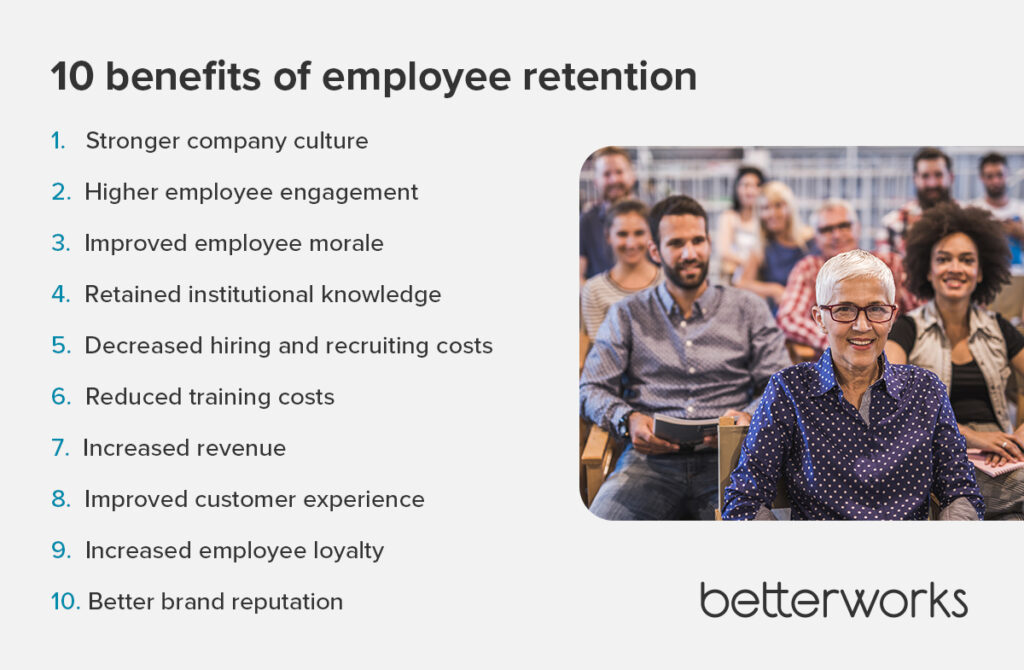
Employee retention ensures a skilled workforce stays, reducing turnover costs. It boosts productivity and maintains company culture. Retaining employees fosters long-term growth and competitive advantage.
How Does Employee Retention Impact Company Profits?
High retention lowers hiring and training expenses. Experienced employees improve efficiency and customer satisfaction. This leads to increased revenue and stronger profit margins.
What Strategies Improve Employee Retention Rates?
Effective strategies include offering competitive pay, career development, and work-life balance. Recognizing achievements and fostering positive culture also help retain talent. These efforts reduce turnover and enhance employee loyalty.
Can Employee Retention Affect Customer Satisfaction?
Yes, loyal employees provide better service and build trust. Consistent staff improves customer relationships and experience. This drives repeat business and positive brand reputation.
Conclusion
Strong employee retention builds a loyal and skilled workforce. It cuts hiring costs and boosts team morale. Consistent teams work better and deliver higher quality results. Businesses grow faster when employees stay longer and feel valued. Focus on keeping talent to maintain steady progress and success.
Retaining employees is a smart strategy for lasting business growth. Simple steps today lead to big gains tomorrow.