Are you looking to grow your crypto assets but unsure whether staking or yield farming is the better choice? Both methods promise rewards, but they work differently and come with their own sets of advantages.
Understanding the pros of staking versus yield farming can help you make smarter decisions with your investments. You’ll discover which option suits your goals, risk level, and time commitment. Keep reading to unlock the secrets that could boost your crypto earnings.
Staking Basics
Staking is a simple way to earn rewards by holding cryptocurrencies. It helps secure the blockchain network and keeps transactions running smoothly. Many people choose staking to grow their crypto over time without much effort.
This method involves locking your coins in a digital wallet. In return, you receive rewards based on the amount you stake. It is a low-risk option compared to other crypto investments.
How Staking Works
Staking means holding coins in a network to support its operations. The blockchain uses these coins to verify transactions. This process is called Proof of Stake (PoS).
Users lock their coins in the staking platform. The more coins staked, the higher the chance to earn rewards. Rewards come from transaction fees and new coins created.
Staking also helps keep the network secure. If the network detects bad behavior, stakers may lose part of their coins. This encourages honesty and stability.
Popular Staking Platforms
Many platforms offer easy staking options. Coinbase and Binance are popular for beginners. They support multiple cryptocurrencies and offer clear instructions.
Other platforms like Kraken and Crypto.com provide competitive rewards. They also have mobile apps for staking on the go. Choosing a platform depends on coins supported and fees charged.
Most platforms require you to hold a minimum amount of coins. Always check the lock-up period before staking. This period means you cannot withdraw your coins immediately.
Yield Farming Essentials
Yield farming is a popular way to earn rewards with cryptocurrency. It involves lending or staking crypto assets in a pool. Users get returns based on the pool’s performance.
This method can offer higher rewards than traditional staking. It also carries more risks. Understanding the basics helps make better decisions.
Mechanics Of Yield Farming
Yield farming works by providing liquidity to decentralized platforms. Users deposit tokens into a liquidity pool. These pools support trading on decentralized exchanges.
In return, farmers earn fees or new tokens. Rewards depend on the amount and duration of the deposit. Smart contracts manage the process automatically.
Farming often requires moving funds between different pools. This process is called “harvesting” and “compounding.” It can increase earnings but needs active management.
Top Yield Farming Protocols
Several protocols lead the yield farming space. These platforms offer various pools and reward systems.
Uniswap is a major decentralized exchange with many liquidity pools. It allows users to earn fees by providing tokens.
Compound lets users lend crypto and earn interest. It adjusts rates based on supply and demand.
Aave provides flexible borrowing and lending options. It offers rewards for liquidity providers.
Curve focuses on stablecoin pools with low risk. It attracts users looking for steady returns.
Benefits Of Staking
Staking offers several benefits that attract many crypto users. It is a simple way to earn rewards by holding coins. It requires less active management than other methods like yield farming. Staking also helps support the blockchain network, creating a win-win situation for users and the system.
Steady Passive Income
Staking provides a regular income stream without selling your assets. Rewards come from the network as interest or new tokens. These payments usually happen at fixed intervals. This steady income helps build wealth slowly and safely.
Lower Risk Factors
Staking carries fewer risks than many other crypto activities. You usually keep your original coins safe in your wallet. There is less chance of losing funds due to market changes. No need to move tokens frequently, so fewer mistakes or losses occur.
Network Security Contribution
Staking helps protect the blockchain network from attacks. Your staked coins support transaction validation and network stability. This makes the system more reliable and trustworthy. Users who stake feel proud to help maintain the network’s health.
Credit: crowdswap.org
Advantages Of Yield Farming
Yield farming offers several benefits that attract many investors in the crypto space. It provides ways to earn more from your assets than traditional methods. The flexibility and extra rewards make it popular for those wanting to grow their investments faster.
Higher Return Potential
Yield farming often gives higher returns than staking or saving accounts. Users can earn interest and extra tokens as rewards. These returns come from lending, liquidity provision, or other DeFi activities. The chance to gain more makes yield farming appealing to risk-takers.
Flexible Investment Options
Investors can choose from many pools and strategies in yield farming. This variety allows people to pick based on risk, reward, or time commitment. Some farms let users move funds easily, offering more control over investments. Flexibility helps users adjust their plans as market conditions change.
Incentives And Bonuses
Many yield farms offer bonuses to attract and keep investors. These include extra token rewards, fee discounts, or early access to new projects. Such incentives increase the overall earnings and add value beyond normal interest. Bonuses encourage active participation in the farming ecosystem.
Risks To Consider
Staking and yield farming offer ways to earn passive income in crypto. Both have risks that could affect your returns. Understanding these risks helps you make safer choices. Here are key risks to consider before you start.
Market Volatility Impact
Crypto prices can change very fast. This volatility can reduce the value of your staked or farmed assets. Sudden drops may cause losses even if you earn rewards. Staying aware of price swings is important for managing risk.
Smart Contract Vulnerabilities
Both staking and yield farming rely on smart contracts. These are computer codes that handle your funds automatically. Bugs or flaws in the code can lead to hacks or losses. Choosing trusted projects reduces this risk but does not eliminate it.
Liquidity Risks
Liquidity means how easily you can buy or sell an asset. In staking and yield farming, liquidity can be limited. This makes it hard to withdraw your funds quickly. Low liquidity may force you to sell at a lower price or wait longer.
Choosing What Fits You
Choosing between staking and yield farming depends on your personal needs. Each option has unique benefits and challenges. Understanding what fits your style helps you invest wisely. Focus on your comfort level and goals for better results.
Take time to evaluate your situation. This helps avoid mistakes and stress. The right choice makes your money work well for you.
Risk Tolerance Assessment
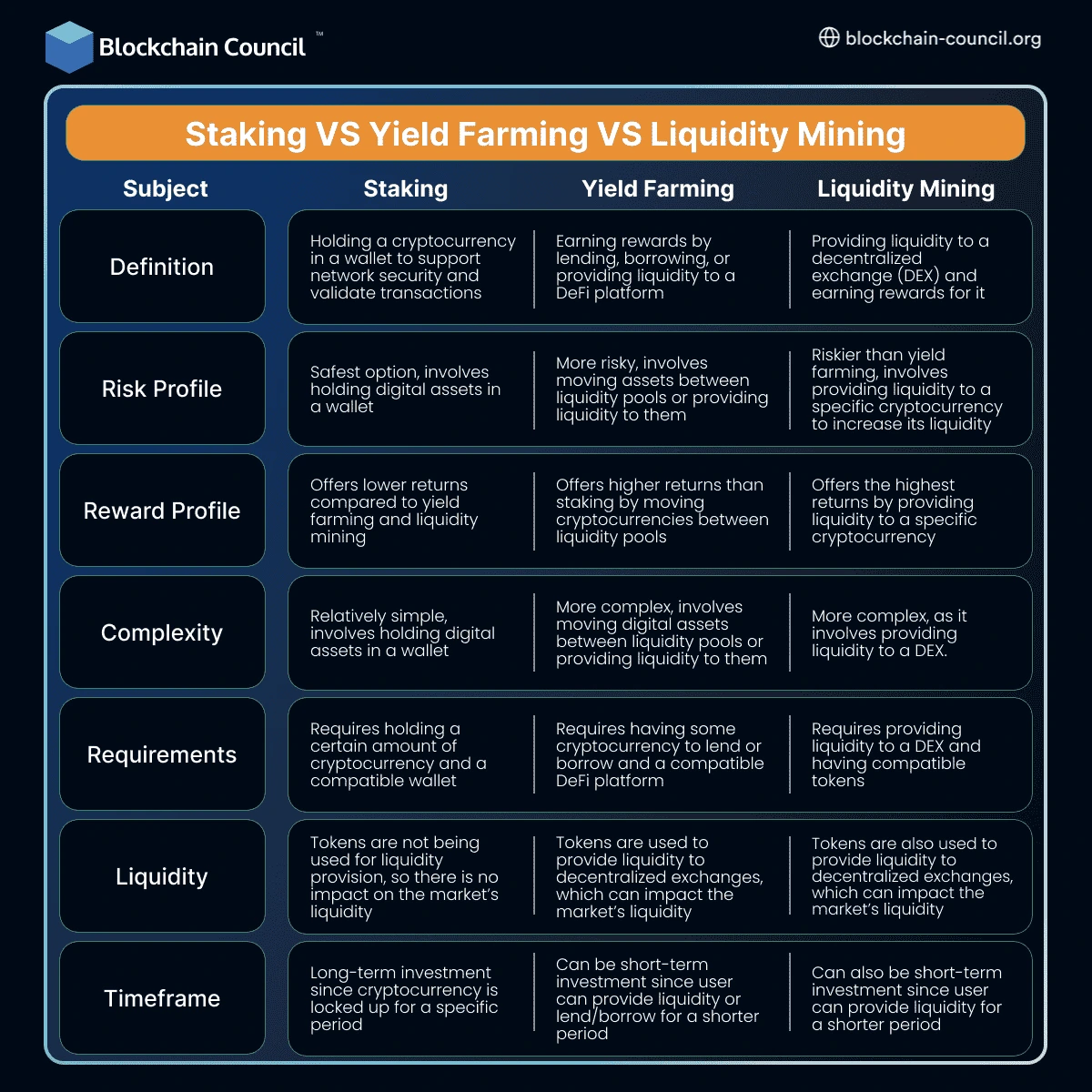
Staking usually involves lower risk. It locks your coins for a set time. Yield farming can offer higher rewards but with more risk. It depends on market changes and platform safety. Decide how much risk you can handle before choosing.
Investment Goals Alignment
Think about what you want from your investment. Staking suits those who want steady income. Yield farming fits those aiming for bigger gains quickly. Match your strategy with your money goals. This keeps your plan clear and focused.
Time Commitment
Staking often requires less time to manage. You lock your assets and earn rewards automatically. Yield farming needs more attention and work. You must check pools and move funds often. Choose the option that fits your schedule best.
Tax Implications
Understanding tax implications is key for crypto investors. Taxes affect your overall profits from staking and yield farming. Both methods have unique tax rules. Knowing these helps you plan better and avoid surprises.
Staking Income Taxes
Staking rewards count as income. Tax authorities treat these rewards as regular earnings. You must report them in your tax return. The value of rewards at the time you receive them sets the taxable amount. Holding staked coins longer may cause capital gains tax when sold. Keep records of all staking transactions for accuracy.
Yield Farming Tax Considerations
Yield farming involves more complex taxes. Earnings come from interest, fees, or token rewards. Each type may have different tax rules. Like staking, rewards are taxable when received. Selling or swapping tokens may trigger capital gains tax. Tracking every transaction is essential. Tax laws vary by country, so check local rules carefully.
Credit: www.blockchain-council.org
Tools And Resources
Choosing between staking and yield farming requires good tools and resources. These help you track your investments and keep them safe. Using the right tools makes managing your earnings easier and more secure. They give clear information about your profits and risks. This section covers key tools for tracking and security.
Tracking Your Earnings
Many platforms offer dashboards to show your staking or yield farming earnings. These tools update in real time. You see how much you earned and your current balance. Some apps send alerts about important changes in your investments. This helps you act quickly if needed. Tracking tools also display fees and rewards clearly. They make it simple to compare different options.
Security Best Practices
Security is critical in both staking and yield farming. Use wallets that support strong encryption. Enable two-factor authentication for extra protection. Avoid sharing private keys or passwords. Regularly update your software and apps. Use trusted platforms with good reputations. Monitor your accounts for unusual activity. Following these practices reduces risks of hacks and theft.
Credit: 101blockchains.com
Frequently Asked Questions
What Is The Main Difference Between Staking And Yield Farming?
Staking involves locking tokens to support network operations. Yield farming provides liquidity to earn rewards. Staking is simpler, while yield farming can be more complex and riskier.
Which Offers Higher Returns: Staking Or Yield Farming?
Yield farming generally offers higher returns due to multiple reward opportunities. However, it carries more risks. Staking offers steadier, lower-risk rewards with less complexity.
Is Yield Farming Riskier Than Staking?
Yes, yield farming is riskier. It involves smart contract risks and market volatility. Staking is more secure but offers lower returns.
Can Beginners Start With Staking Or Yield Farming?
Beginners should start with staking. It’s easier to understand and less risky. Yield farming requires deeper knowledge and risk management skills.
Conclusion
Staking and yield farming both offer ways to earn rewards with crypto. Staking is simpler and often safer for beginners. Yield farming can give higher returns but needs more work and risk. Choosing depends on your goals and how much time you want to spend.
Think about what fits your comfort and knowledge. Both methods can grow your assets if used wisely. Keep learning and stay careful with your investments. Small steps lead to steady progress.