Have you ever wondered how long it would take to get to Mars? It’s a question that sparks curiosity and excitement.
Imagine yourself leaving Earth behind and traveling millions of miles through the vastness of space. But before you start dreaming about setting foot on the Red Planet, you need to know the real time it takes to get there. The answer isn’t as simple as you might think.
Factors like distance, spacecraft speed, and the positions of Earth and Mars all play a role. You’ll discover what affects the journey time, how current technology measures up, and what challenges astronauts face along the way. By the end, you’ll have a clear picture of just how long your trip to Mars would take—and why it matters for future space exploration. Ready to find out? Let’s dive in.
Mars Distance And Orbit
Understanding the distance and orbit of Mars is key to estimating travel time. Mars does not stay the same distance from Earth. It moves in an orbit that changes its position constantly. This affects how long a trip to Mars can take.
Earth To Mars Distance Variations
The distance between Earth and Mars varies greatly. At its closest, Mars is about 54.6 million kilometers away. At its farthest, the distance can stretch to 401 million kilometers. This huge range happens because both planets orbit the Sun at different speeds and paths.
Orbital Positions And Windows
Traveling to Mars depends on the planets’ positions in orbit. The best time to launch is during a “launch window.” This window opens when Earth and Mars are aligned to minimize travel time and fuel use. Launch windows occur roughly every 26 months.
Synodic Period Impact
The synodic period is the time between similar alignments of Earth and Mars. It lasts about 780 days. This period determines how often the launch windows appear. Missing a window means waiting over two years for the next chance.
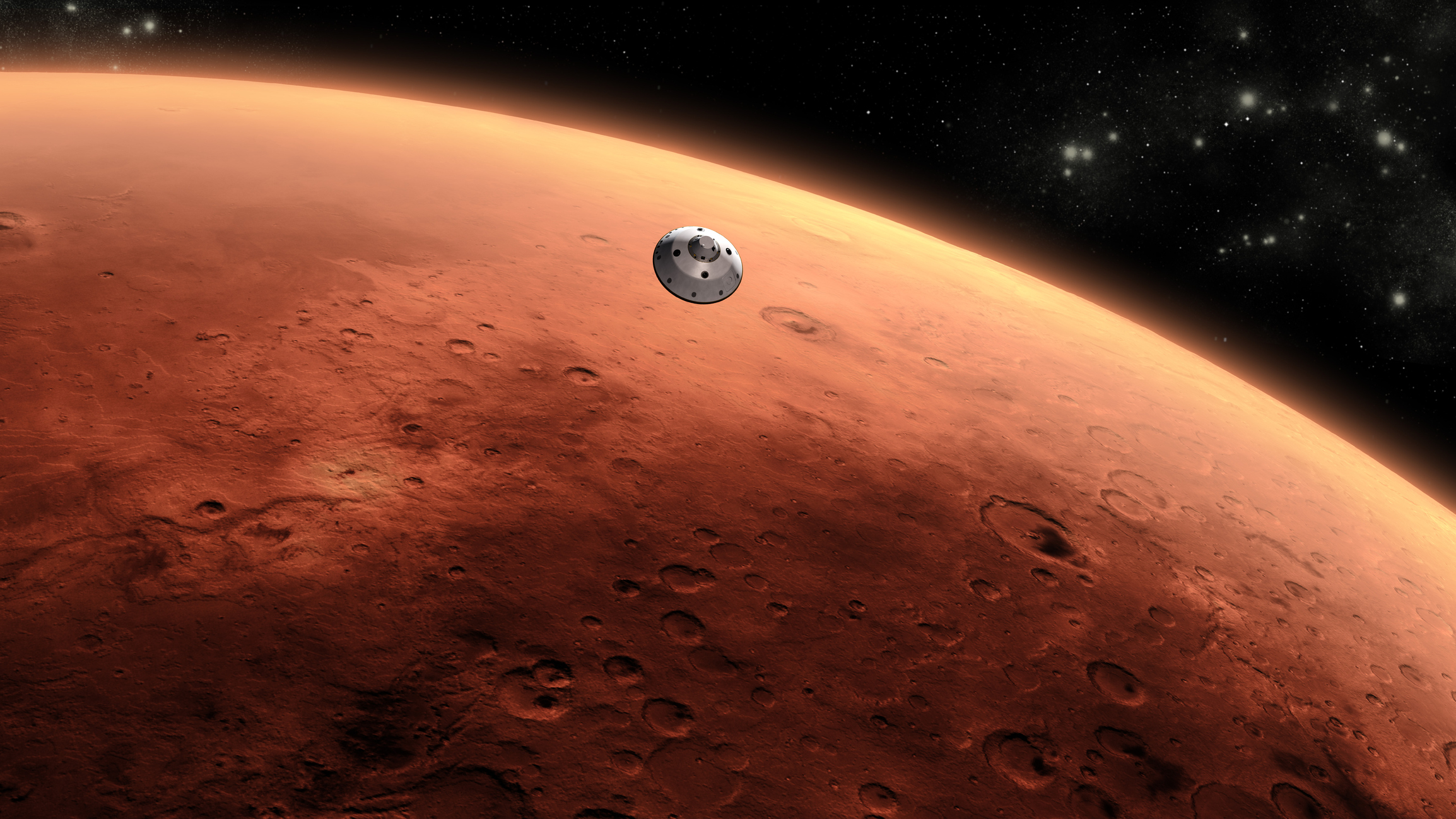
Credit: www.skyatnightmagazine.com
Spacecraft Travel Speeds
Spacecraft travel speeds play a crucial role in determining how long it takes to reach Mars. Different phases of the journey involve varying speeds. These speeds depend on the spacecraft’s design and the propulsion technology used. Understanding these factors helps explain the travel time to the Red Planet.
Typical Launch Velocities
At launch, spacecraft must reach high speeds to escape Earth’s gravity. Typical launch velocities range from 25,000 to 40,000 kilometers per hour. This speed allows the spacecraft to enter orbit and begin its trip to Mars. The faster the launch velocity, the quicker the spacecraft can start its journey.
Cruise Phase Speeds
During the cruise phase, spacecraft travel through deep space at steady speeds. These speeds usually range between 20,000 and 30,000 kilometers per hour. The cruise speed depends on the trajectory and mission plan. Maintaining a steady speed conserves fuel and ensures the spacecraft stays on course.
Effect Of Propulsion Methods
Propulsion methods greatly impact travel speed and time. Chemical rockets provide powerful bursts for launch and course corrections. Electric propulsion offers slower but efficient acceleration over long distances. Future methods like nuclear or ion drives could increase speeds. Faster propulsion means shorter trips to Mars.
Common Mission Durations
Traveling to Mars involves different mission lengths depending on the type of spacecraft and mission goals. Understanding common mission durations helps us see how technology and planning affect travel time.
Mars is far from Earth, and the time it takes to reach it varies. Distances change as both planets orbit the Sun. This affects how long each mission lasts.
Robotic Missions Timeline
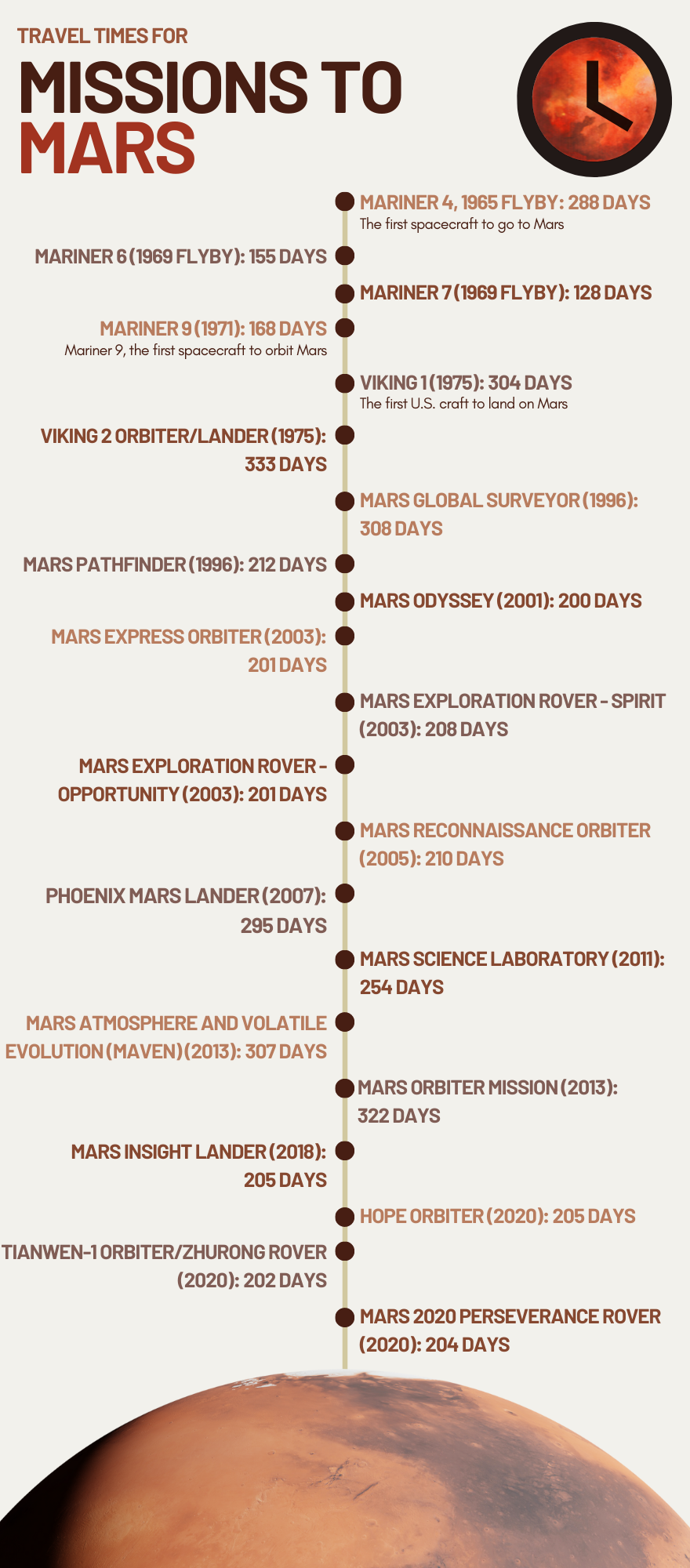
Robotic missions to Mars usually take between six and nine months. Most spacecraft launch during windows when Earth and Mars are closer. This helps save fuel and time.
For example, NASA’s Curiosity rover took about eight months to reach Mars. The Perseverance rover had a similar travel time. These missions show how robotic explorers reach Mars relatively quickly.
Human Mission Estimates
Human missions need careful planning and longer travel times. Experts estimate trips lasting six to nine months one way. Astronauts must stay healthy during this long journey.
Life support, radiation protection, and supplies are major concerns. Plans include months on Mars for research before returning. Total mission duration could last two to three years.
Fastest Recorded Trips
The fastest spacecraft reached Mars in just under six months. NASA’s Mariner 7 made the trip in about 131 days. Speed depends on launch conditions and spacecraft power.
Faster trips use more fuel and energy. Future missions might cut travel time with new propulsion technology. For now, six to nine months remains standard.
Travel Path And Trajectories
Traveling to Mars requires precise planning of the spacecraft’s path. The journey depends on the orbit and trajectory chosen. These paths affect how long the trip will take and how much fuel is needed. Scientists use different methods to find the best route. Understanding these paths helps us grasp the challenges of reaching Mars.
Hohmann Transfer Orbit
The Hohmann transfer orbit is the most common path to Mars. It uses an elliptical orbit to move between Earth and Mars. This path saves fuel by using the planets’ positions. The trip typically takes about 6 to 9 months. It requires launching when Earth and Mars align properly. This orbit is simple and energy-efficient.
Fast Transfer Trajectories
Fast transfer trajectories shorten the travel time to Mars. They use more fuel and powerful rockets. These paths can reduce the trip to around 3 months. Fast transfers need precise timing and advanced technology. They are ideal for urgent missions or cargo delivery. The challenge is balancing speed with fuel use.
Gravity Assists
Gravity assists use the pull of other planets to boost speed. Spacecraft fly close to a planet to gain momentum. This method saves fuel and can change the spacecraft’s direction. Gravity assists can reduce travel time and cost. They require careful navigation and planning. NASA often uses this technique in deep space missions.
Challenges Affecting Travel Time
Traveling to Mars is not just about distance. Many challenges affect how long the trip will take. These challenges include dangers from space, the need to keep astronauts alive, and current technology limits. Each issue can slow down or complicate the mission.
Radiation Exposure Risks
Space radiation is one of the biggest dangers on the way to Mars. Without Earth’s atmosphere and magnetic field, astronauts face harmful cosmic rays. Prolonged exposure can cause serious health problems. Shielding the spacecraft adds weight and complexity. This can slow down the mission and increase travel time.
Life Support Requirements
A Mars trip lasts months, so astronauts need reliable life support. They require food, water, and air for the whole journey. Recycling systems must work perfectly to avoid shortages. Any failure can delay the mission or force an early return. Life support also includes waste management and temperature control. All these systems add to the spacecraft’s weight, affecting speed.
Technical Limitations Of Propulsion
Current rocket technology limits how fast we can travel to Mars. Chemical rockets have speed and fuel limits. Faster propulsion needs new technology, which is still in development. More powerful engines mean more fuel and bigger spacecraft. This adds to the mission’s cost and complexity. Until better propulsion is ready, travel time will stay long.
Credit: www.space.com
Engineering Hurdles
Traveling to Mars is not just about distance. It involves many engineering challenges. These challenges affect how long the trip takes and whether it is safe. Engineers must solve problems related to landing, traveling, and protecting the spacecraft and crew.
Each step requires advanced technology and precise planning. The harsh environment of space and Mars adds to the difficulty. Below are some key engineering hurdles that impact Mars missions.
Landing Heavy Payloads
Mars missions need to carry large equipment and supplies. Landing heavy payloads safely on Mars is very hard. Mars has a thin atmosphere that offers little help to slow down heavy objects. Engineers must design systems that can protect these payloads from crashing.
Strong airbags, rockets, or parachutes often work together to slow the descent. The heavier the payload, the harder it is to control. Solving this problem is key to bringing enough supplies for long missions.
Entry, Descent, And Landing Systems
The entry, descent, and landing (EDL) phase is critical. The spacecraft must survive high speed and heat when entering Mars’ atmosphere. It needs to slow down quickly to avoid damage. EDL systems include heat shields, parachutes, and thrusters.
Each system must work perfectly and in the correct order. Mistakes can cause mission failure. The thin atmosphere makes slowing down harder than on Earth. Engineers test many designs to find the safest and most reliable solutions.
Spacecraft Durability And Safety
The spacecraft must endure harsh space conditions for months. It needs to protect astronauts from radiation and micrometeoroids. Systems must support life for long periods without failure. Engineers use strong materials and advanced shielding.
Safety features include backup systems and emergency protocols. Maintaining spacecraft integrity is essential for crew survival. These factors influence mission length and success.
Health And Psychological Factors
Traveling to Mars is not only about distance and technology. The health and psychological well-being of astronauts plays a huge role. Space travel affects the body and mind in many ways. Understanding these effects helps prepare crews for the long journey ahead.
Effects Of Microgravity
Microgravity causes muscles and bones to weaken. Without Earth’s gravity, bones lose density quickly. Muscles shrink from lack of use. This leads to weakness and higher injury risk. Fluid shifts in the body can cause vision problems. The heart works less, which reduces fitness. Exercise helps but cannot fully stop these changes.
Isolation And Confinement
Astronauts face long periods alone or with a small group. This isolation can cause stress and anxiety. The confined space limits movement and privacy. Communication delays with Earth increase feelings of loneliness. Sleep patterns often get disrupted. Mental health support is vital to keep crews stable. Teamwork skills and trust become essential to manage conflicts.
Maintaining Astronaut Health
Regular exercise is critical to combat muscle and bone loss. Balanced nutrition supports the immune system and energy. Medical supplies must cover many possible issues. Psychological support includes counseling and relaxation techniques. Planning for emergencies ensures quick response. Technology helps monitor health in real time. Preparing astronauts for these challenges improves mission success.
Credit: www.reddit.com
Logistics And Mission Costs
Planning a mission to Mars demands detailed logistics and careful cost management. Every element from launch to landing affects the mission’s success and budget. Supplies, power, and habitat must all be reliable for the long journey and stay on Mars. The cost of sending humans to Mars is high due to complex needs and technology requirements. Efficient planning can help reduce risks and save resources.
Fuel And Supplies Planning
Fuel needs depend on the spacecraft weight and travel distance. Carrying enough fuel for the round trip is difficult. Missions must plan for extra fuel for course corrections. Supplies include food, water, and oxygen for astronauts. Spacecraft storage limits how much can be carried. Resupply missions from Earth add to costs and complexity.
Power And Shelter On Mars
Power systems must work in Mars’ harsh environment. Solar panels are common but dust storms can block sunlight. Nuclear power offers a steady alternative but raises safety concerns. Shelters need to protect astronauts from radiation and extreme temperatures. Building strong habitats requires advanced materials and technology. Life support systems inside shelters must recycle air and water.
Resource Utilization Strategies
Using Mars’ own resources reduces mission costs and supply needs. Extracting water from ice or soil supports drinking and fuel production. Producing oxygen from the Martian atmosphere is vital for breathing and rocket fuel. Growing food on Mars can lower the amount of supplies shipped from Earth. These strategies require new technologies and careful testing before use.
Future Technologies To Reduce Travel Time
Traveling to Mars takes many months with today’s technology. Scientists and engineers work on new ideas to shorten this time. Future technologies aim to make the journey faster and safer. These innovations could change how we explore the Red Planet.
Advanced Propulsion Concepts
New engines could push spacecraft much faster than current rockets. Concepts like ion thrusters and nuclear propulsion offer higher speeds. These methods use less fuel and can run longer. Faster travel means less time in space for astronauts.
Radiation Shielding Innovations
Space radiation harms astronauts on long trips to Mars. New materials and designs can block or reduce this danger. Scientists explore lightweight shields that protect without adding weight. Better shielding keeps crews healthier during faster trips.
Autonomous Systems For Support
Robots and smart computers can help astronauts on Mars missions. These systems manage life support, repairs, and navigation automatically. They reduce the workload and risk for humans. Automation ensures smooth missions even with shorter travel times.
Frequently Asked Questions
How Long Would It Theoretically Take To Get To Mars?
A trip to Mars theoretically takes about 6 to 9 months using current rocket technology. Travel time depends on planetary alignment and spacecraft speed.
Why Can’t We Send Humans To Mars?
We can’t send humans to Mars due to deadly radiation, lack of heavy spacecraft technology, long life support needs, health risks, psychological stress, and high costs. These challenges make safe, round-trip human missions currently impossible.
Can We Get To Mars In 3 Days?
Traveling to Mars in 3 days is impossible with current technology. The journey typically takes 6 to 9 months due to vast distance and propulsion limits. Advanced rockets and life support systems are needed to shorten travel time safely.
Who Is 23 Year Old Prepping To Go To Mars?
The 23-year-old preparing for Mars is a young astronaut trainee chosen for future space missions. They train in advanced space skills and endurance.
Conclusion
Traveling to Mars takes many months, depending on technology and alignment. Current missions last about six to nine months one way. Future advances could shorten this time but challenges remain. Radiation, health effects, and landing safely are major hurdles. Scientists continue working to make Mars trips safer and faster.
Understanding the journey helps us appreciate the effort behind space travel. Mars is far, but human curiosity pushes us forward. The dream of reaching Mars is alive and growing.